
EDMA. Proof, not promises.
Built by operators who ran an $80M trading business and lost over $30M of revenue to letters of credit — so they built the fix. Trade OS, Growyn and Flowyn turn real operations into signed evidence. The EDMA rail settles on that evidence and nothing else: no attestation, no payout, no mint. That rule is Proof-of-Verification, and $EDM is what secures it and gets paid for it. Trade OS and Growyn are complete, and open as public demos.
No evidence. No token.
No settlement
Current price
$0.216
Next price
$0.221
2% increase
Listing price
$1.00
363% increase
15,822 HOLDERS
 ETH ERC20
 USDT ERC20
 USDC
USDC

Built for trade finance, ESG certificates, tokenized commodities and institutional-grade settlement.
See where we are with the build.
The plan runs on two-week sprints. This panel reads the calendar and updates itself.


RAISED:
$4,148,089



BUILT WITH :





Three products. One rail.
The protocol isn’t a promise - working software already feeds it. Each product generates real operational records; the rail turns them into proof; the marketplaces run on that proof.
Trade OS
The operating system every party of a trade signs into - orders, production, shipments, finance, compliance, end to end.
- Full trade lifecycle in one system
- Supplier, client, logistics and financier portals - complete
- Atlas AI + autonomous agents across the platform
Growyn
The AI marketing engine - a full loop that plans, writes, voices and cuts video on your own data. It never fakes a number.
- Fourteen modules in four movements: Think, Attract, Convert, Grow
- Website, content, video studio, SEO, paid ads, CRM
- Runs EDMA’s own growth - the first customer is us
Flowyn
The operating system for renewable-energy assets - one record across the whole life of a project, development to exit.
- Five agents: CFO, Operations, Asset, Trading, ESG
- Lender-grade financial model - blueprint complete
- Grounded in a 237 MWp reference asset
Settlement fees flow through the rail. $EDM is staked, used and burned on the volume.
Proof is portable by design — the PoV SDK opens to external systems in Q1 2027. Any stack, any chain, same verification.
Three industries. Three trillion-dollar frictions. One missing layer.
The common thread isn't industry. It's verification. None of these markets have a way to prove that a real-world claim actually happened. That's the problem EDMA solves.
Letters of credit were designed for one factory shipping to one buyer. They break the moment a trading company sits in between, because LCs aren't cashable unless the final beneficiary is the factory. Every year, over $2T of trading transactions stall, get repriced, or die in that gap. We know because we lost over $30M of revenue to it.
EDMA's answerReplace LCs with milestone-gated stablecoin settlement. Buyer funds escrow. Each milestone signed by an attestor releases the next tranche. Same trust, T+0 instead of T+90.
A household with solar panels produces verifiable clean kilowatt-hours every day. Companies need those exact kilowatt-hours for ESG reporting and carbon offsetting. Banks won't bridge the gap because households can't underwrite PPAs. Certificates of origin get double-counted across registries. Greenwashing audits cost more than the credits they cover.
EDMA's answerTokenise every verified kilowatt-hour into $ETT. Each token signed by an attestor against a single meter. One-Claim Ledger prevents the same kWh being sold twice. Convert to REC, SREC, or GRO certificates on-chain.
Founders raising on-chain capital live in a market where buyers cannot tell verified operators from vapor. Last year more than 11M tokens were launched and most failed. The problem isn't bad ideas. It's the absence of any way to prove the operator is real, the financials are real, the milestones are real.
EDMA's answerFounders raise on Launchpad with operational data verified by attestors. Investors get a signed claim per milestone before tranches unlock. Stage-by-stage settlement instead of all-up-front token allocations.
Different industries. Same broken trust mechanic.
One verification primitive that solves all three.
The shipping ledger.
The first question any serious buyer asks: what runs today? Same rule the protocol lives by — a claim counts when it’s verifiable. What’s complete, what’s in build, what’s in development — every entry covered in a dev release.
The full trade lifecycle
Orders, production, shipments, the finance suite, compliance, inventory and documents - one system, every party.
Four counterparty portals
Suppliers, clients, logistics and financiers each get a free seat on the same record. No email ping-pong.
Atlas AI + autonomous agents
A platform AI that knows your operation - and agents that handle confirmations, QC cascades and invoicing on their own.
The full marketing loop
Fourteen modules that plan, write, voice and cut video on your own data - from funnel plan to CRM.
The third pillar, designed
One record for a renewable asset, development to exit. Five agents, a lender-grade model, blueprint complete.
Audited and public
Two independent audits signed - Cyberscope and Coinsult. Layer 2 in development, testnet in preparation. Mainnet promotion in Q4.
Three industries. One verification primitive. Own the rail.
- Instant claim, no vesting cliffTokens are claimable as soon as the presale closes. No 12-month unlock schedule, no quarterly tranches.
- Pay with ETH, USDT, or USDCDirect payment to the audited contract on Ethereum. No third-party custodian, no proprietary chain. Your wallet, your keys.
- Audited by Cyberscope and CoinsultSmart contract reviewed by two independent firms. Reports are public and linked from the hero badge.
- Anchored on Ethereum L1Settlement secured by Ethereum's validator set. Bridge to EDMA L2 once mainnet is live.
- Stake $EDM once Phase 2 is liveEarn protocol fee share from verified-asset settlement once L2 mainnet launches in Q4 2026.
Five steps. Same five for a shipment, a kilowatt-hour, or a quarterly report.
A rule an application can opt out of is a suggestion — on EDMA, no valid attestation means no execution, and these five steps are how that rule is enforced. What changes between use cases is the attestor and the evidence. The rule never does.
Claim
A real-world event is submitted to the protocol as a structured claim.
Attestation
An independent attestor verifies the claim against source evidence and signs it with their staked identity.
PoV Gate
Before any contract can act on the claim, the gate checks the attestor signature against the on-chain registry.
Settlement
With proof cleared, the contract executes. Funds release, tokens mint, certificates issue.
Ledger
The claim, signature, contract action, and resulting state are written to the EDMA ledger: one entry per event, deduplicated across attestors.
The five steps do not change. What changes is who the attestor is, what evidence they sign against, and which contract acts on the proof. One protocol. Three industries. One rule underneath.
Edma Ecosystem
POV
Marketplace
Marketplace
Marketplace
Oracles
Holders
Producers
Operators
SCF
Rules
(PoVID)
Layer
Vault
Treasury
Attestors & Validators
The Trust Layer
Two groups. One rule.
Proof-of-Verification works because enforcement is split between two independent groups. Neither can settle anything alone.
Attestors
Licensed third parties who verify real-world evidence off-chain — cargo surveys, quality certificates, meter data, audited financials. Their signature creates the verified certificate (povId) that controls minting and settlement. Paid per accepted verification; reputation public and enforceable.
Attestor Registry →Validators
Verified legal entities that anchor PoV events on Ethereum, secure ordering, and keep settlement executing correctly. Rewards are usage-based — a share of network fees, scaled by verified volume and uptime. No fixed yield. No hidden rewards. Everything on the public Scoreboard.
Network security model →Built by an operator-scale team. Not anons.
EDMA Group is the corporate vehicle behind the network. An Arizona-headquartered operator running RWA infrastructure today. The same team is shipping the chain, the marketplaces, and the operator stack.
RWA operations to date. Real cash flow from a real operating business, not a paper-promise pipeline.
Edma Talent is the AI and blockchain engineering arm. The chain, the contracts, the marketplaces, and the operator OS all ship from one team.
PrimeHire pipeline. Top-1% engineers, pre-vetted and deployable. We do not hire at random when the roadmap needs to ship.
EDMA is what I wish had existed in 2020.
In 2020 I spent five months in quarantine across three countries getting a glove factory to work with us. We delivered 300,000 boxes, then signed a deal for 10 million boxes with a buyer who wanted to pay by letter of credit.
He tried to issue an LC transferable to the factory. The factory couldn't cash it. We lost three months to the paperwork, the buyer eventually paid cash and stayed, but the production window was gone. Over $30M of revenue died on a form that was designed for a different century.
I spent the next two years drawing the mindmap that would fix it. Then I went into renewable energy and ran into the next problem: banks wanted PPAs I couldn't underwrite, certificates of origin got double-counted between registries, and projects that should have financed themselves stalled on paperwork the same way the gloves had. Different industry, same broken trust mechanic.
Walking down a street in Phoenix I realised the thing missing across both industries was the same thing: a way to prove that a real-world claim actually happened, in a form that contracts could act on without a human-in-the-middle. That's what EDMA is. Same primitive - trade, energy, capital raises. One rule underneath.
You're reading this on a presale page. I'm aware of how it looks - a verification protocol running its own unverified raise. So let me name it directly: I'm running the kind of raise I want EDMA's Launchpad to verify one day. Audits signed and public. Working product in beta. Operational history with receipts. Presale telemetry live on the page you're reading. Judge me by that standard. If it isn't enough, walk away. If it is, the presale is open.
Tokenomics
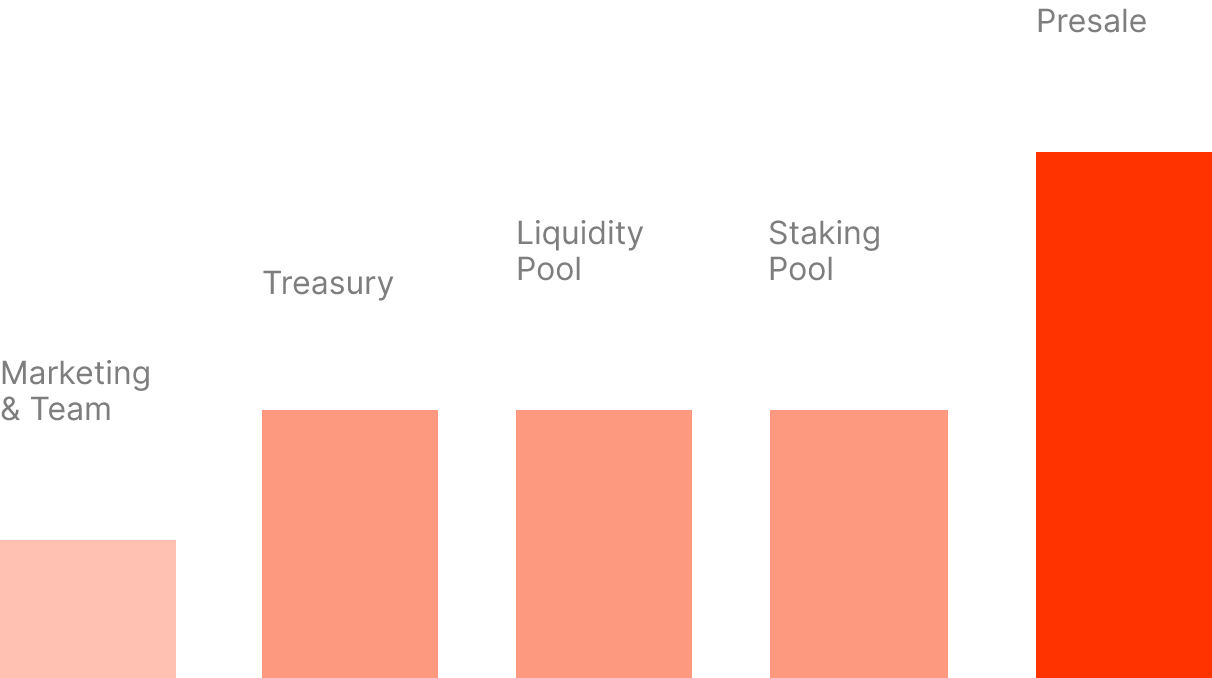
Please note that you should not send any tokens to this address, as doing so may result in the permanent loss of the
tokens.
220M
Coins offered
$1.00
Market Listing Price
EDMA
Symbol
81%
Low Risk
How to buy
Get $EDM in 3 steps.
Less than 5 minutes. Crypto-native or first-timer - same process.
Connect or fund a wallet
Use MetaMask, Coinbase Wallet, or any WalletConnect-supported wallet. New to crypto? Buy ETH or USDC on Coinbase or Binance first, then send to your wallet.
Send ETH, USDT, or USDC
Open the presale page and send to the audited EDMA contract. Minimum $50. The current discount tier price locks in at the moment your transaction confirms.
Receive $EDM automatically
Your $EDM allocation appears on your dashboard. Claim at TGE - exchange listings begin within ~2 weeks of presale close.
Sequenced by evidence, not by ambition.
Each phase adds the next layer of value on top of evidence we can already prove. Trade OS first because it is the problem we lived. L2 second because the verification rule must exist before any marketplace can rely on it. Marketplaces third when volume starts to compound. Listings fourth when volume earns tier-1 access. Launchpad last because it requires every layer below.
Presale capital funds the customer acquisition that produces all of the above. Growth and product validation are the same workstream.
Trade OS + Growyn — complete
Both products complete, open as public demos. Flowyn in build. Subscriptions accrue to the company and build the L2 customer base.
Go-live + L2
Trade OS + Growyn live, L2 testnet, mainnet promotion. First visible $EDM burns on-chain.
Marketplaces live
GlobalTrade, ESG, Launchpad operating. Uniswap listing.
Tier-1 + ESG
Volume earns CEX listings. Carbon flow at scale.
Launchpad live
Every layer below is operational. Founders raise on proof.
Watch the reviews

Earn while you share
20% of every purchase from your referrals - in $EDM.
Share your link, earn on every buy. Paid in $EDM, T+0. No cap, no minimum, no clawback.