What the Logistics Portal is
The Logistics Portal is what the operator’s freight providers log into: forwarders, 3PLs, customs brokers, truckers, drivers. It is a coordination layer, not a replacement TMS. The forwarder keeps their own system; the portal complements it through CSV export, push to API endpoints, and ingestion of carrier API updates. The portal never demands the forwarder abandon their existing tooling. Free seats up to tier limits.
What it replaces
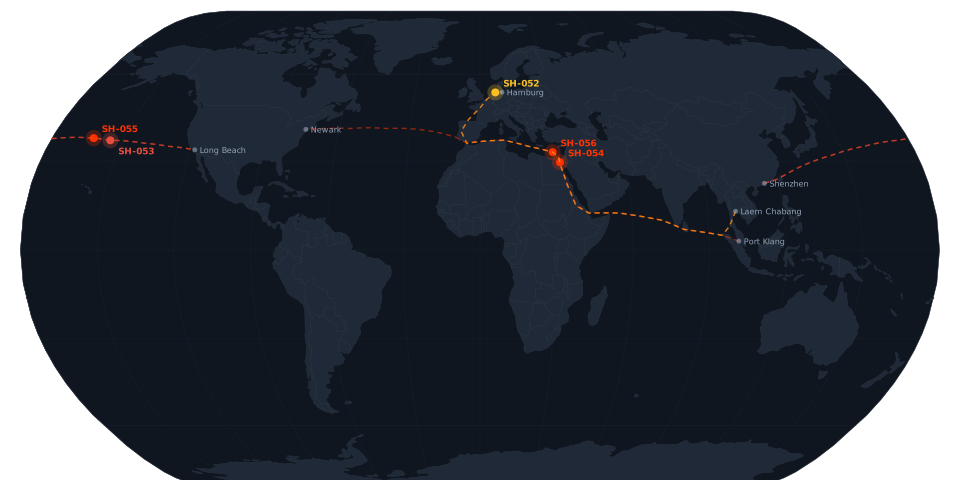
What logistics providers do: receive booking requests, accept or counter, post milestones (gate-in, vessel ETD, transhipment, ETA, delivery), upload bills of lading, file customs declarations, share rate sheets, handle exception flows (port congestion, weather, customs holds). Mobile is the only feasible input method at specific moments: port gate-ins, container photo evidence, driver proof of delivery, seal-break events, customs clearance confirmations. These flows are designed from the mobile screen first. What it replaces: email threads for bookings that get lost or duplicated, WhatsApp coordination for milestones, phone calls at odd hours for vessel arrivals, PDF scans of BOLs and customs paperwork, spreadsheet rate sheets shared manually, disconnected customs filing systems.
Mode-aware design
The portal is mode-aware. A forwarder’s view emphasises bookings and milestone reporting. A trucker’s view emphasises pickup, POD capture, and delivery confirmation. A customs broker’s view emphasises filings and clearance tracking. Same platform, different ergonomics per role. Forwarders serving multiple EDMA operators see a unified dispatch view across all of them.
What logistics providers do
Mode-aware UI
Different surfaces for forwarder / trucker / customs broker / driver, all from the same data model. The trucker doesn’t wade through bookings. The customs broker doesn’t wade through dispatch.
Mobile at the dock
Gate-in scans, container photo evidence, driver POD capture, seal-break events, customs clearance confirmations. The flows where mobile is the only feasible input are designed mobile-first.
Milestone posting
Structured milestones: gate-in, vessel ETD, transhipment, ETA, delivery, exception flags. Each milestone is a signed event the protocol can mint a token against.
Customs filings
Declaration prep, submission to customs authorities, clearance tracking. Replaces the disconnected customs filing systems forwarders maintain alongside their TMS.
Rate-sheet management
Quoted rates per lane per equipment type, versioned, with effective dates. Operators stop chasing PDF rate sheets via email; forwarders stop maintaining one rate sheet per buyer relationship.
Multi-operator dispatch
One login for forwarders, 3PLs, and brokers serving multiple EDMA operators. Unified queue of booking requests, milestones to post, and exceptions to resolve across every operator relationship.
Where it stands today
The Logistics Portal ships at TradeOS public launch (August 1, 2026), at the end of Stage 1 of the EDMA roadmap. Already shipped on the platform: logistics identity model (multi-operator), mode-aware UI scaffold for forwarder / trucker / customs broker / driver, booking lifecycle, milestone posting framework, customs filing core. Following at public launch and Q4 2026: carrier API integrations (Maersk, MSC, CMA CGM and other major ocean lines), mobile-PWA installable build for dock and driver use, rate-sheet versioning UI, exception-flow automation. Pricing at edma.trade. Full roadmap at /roadmap/.